6 min read
Every award-winning show car started as a rough idea: a reference photo, a colour, a feeling. The gap between that idea and a finished build that actually holds together (mechanically and visually) is where most projects go wrong. Not because the work was bad, but because the plan was missing.
Start with the brief, not the parts list
It's tempting to start a build by buying the wheels you love or the engine you've always wanted. Resist it. Start by writing down what the car is for: a show car that lives on a trailer, a daily that needs to survive potholes, or something in between. That single decision drives ride height, wheel fitment, engine choice and paint finish, so get it wrong and you'll be undoing expensive work later.
Budget in three buckets, not one number
Custom builds rarely blow out because of the headline item, the engine swap or the widebody kit. They blow out on the in-between costs: rewiring for a swapped motor, custom mounts, or corrosion found once a panel comes off. Budget separately for the hero item, the supporting fabrication, and a 15 to 20% contingency for what you find once the car is stripped down.
Engine swaps live and die on fabrication, not the engine
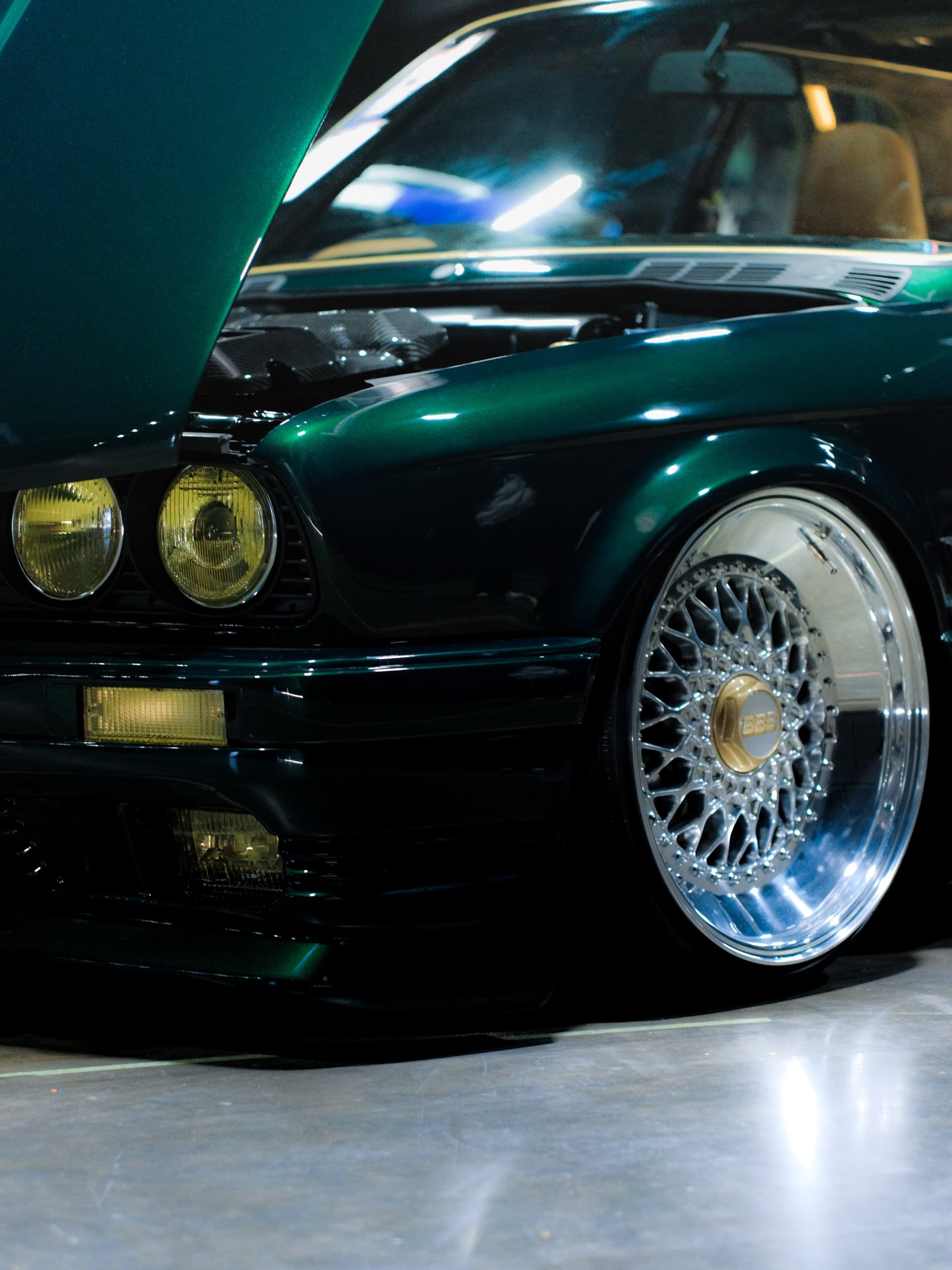
Dropping a modern engine into a classic shell, an S58 into an E30 for instance, is straightforward on paper and genuinely difficult in practice. The engine itself is often the easy part; the real work is custom mounts, wiring harness integration, cooling, and making sure the finished bay looks like it was always meant to be there rather than bolted in as an afterthought. This is the stage where the gap between a good shop and a great one shows up most.
Build in checkpoints, not just a deadline
If you're building toward a specific show date, work backwards from it with the shop and agree on checkpoints: bodywork complete, paint complete, mechanical complete, final detail, rather than a single finish date. It gives you an early warning if something's slipping, and it gives the shop room to get the finish right instead of rushing the last week.
Common Questions
How long does a full custom build take?
It depends heavily on scope. A cosmetic refresh can take a few weeks, while a ground-up restoration or engine swap with full bodywork typically runs several months. Get a realistic timeline in writing before work starts, broken into stages.
Should I choose the wheels and stance before or after the engine work?
Decide ride height and intended use first, since it affects suspension choice, which affects fitment. Choosing wheels before you know your final stance is one of the most common (and expensive) ordering mistakes.
Can a shop help design the build, or do I need my own plan first?
A good shop should be able to work from a rough idea and help you develop it into a proper spec, but coming in with a clear sense of purpose (show car vs daily, budget range, must-have features) makes that conversation far more productive.